01何首乌
He Shou Wu
Fo-ti root
A botanical root named in the blend. The product notes do not specify its processing method.
 SHANXIN TANGOBJECTS FOR UNHURRIED LIVINGInquire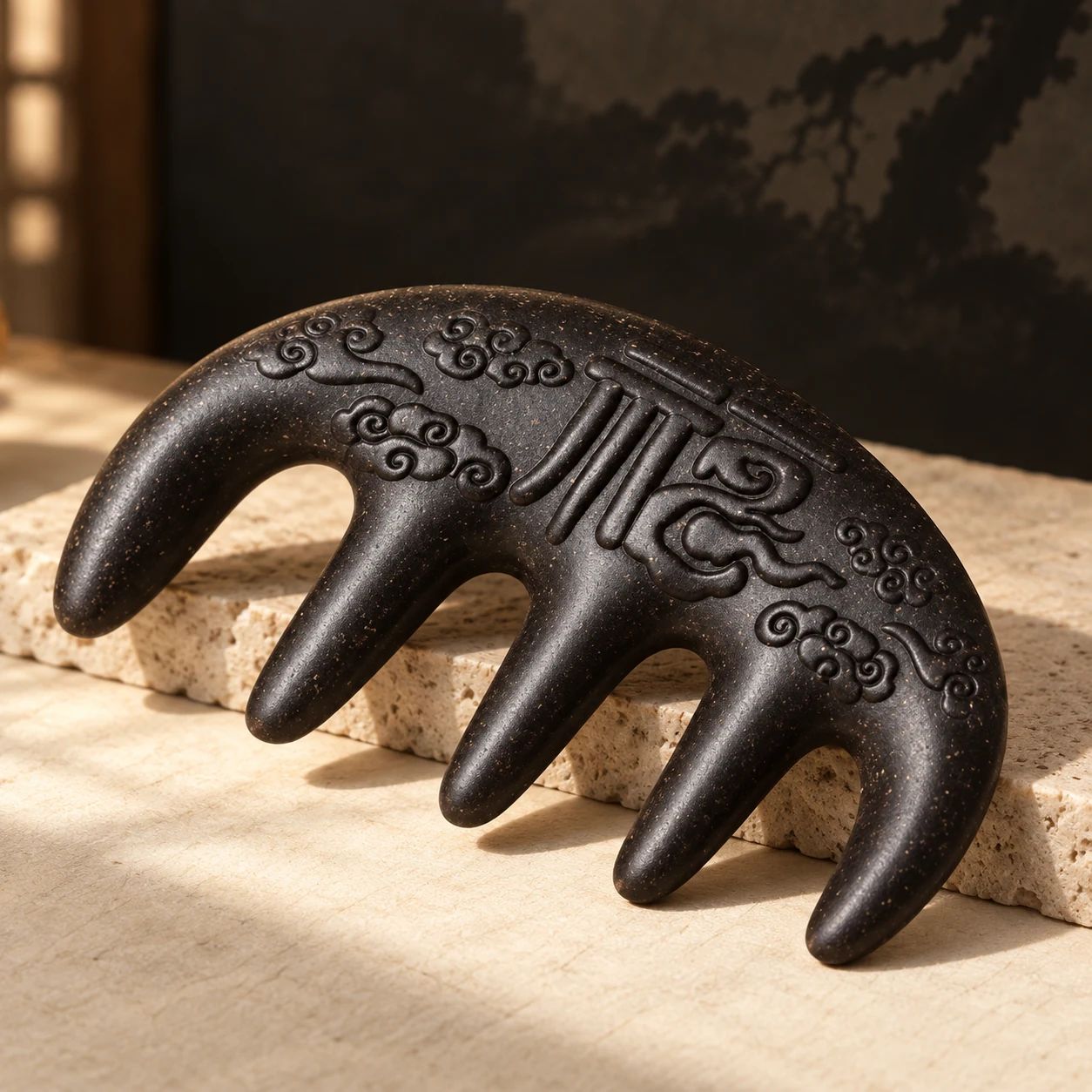
THE OBJECT · 草本合香梳
Botanical materials. A quiet aroma.
A small ritual to return to.
A solid blend of aromatic and herbal materials, shaped into a comb and inspired by Chinese hexiang culture. Not simply a wooden comb with perfume added—and not an incense stick to burn.
$88 USD + $12 USD shipping per order. We confirm delivery availability and return arrangements first, then send you a private PayPal checkout link. Any import duties or local taxes charged on arrival are not included.
01 / UNDERSTANDING HEXIANG
合 means “to bring together.” 香 means “fragrance” or “incense.”
In our product description, hexiang refers to the blending of aromatic materials. Here, that blend becomes a solid object: something to hold, notice and use, rather than a fragrance applied to a conventional comb.
Its woody, herbal scent is part of the experience. It is not a perfume with a promised projection or wear time; we do not claim a fixed fragrance intensity or duration.
Read the introduction to hexiang02 / THE NAMED MATERIALS
These five botanical materials and honey are named in the supplied product description. Their names tell you about the blend—not what the finished comb can do for your health.
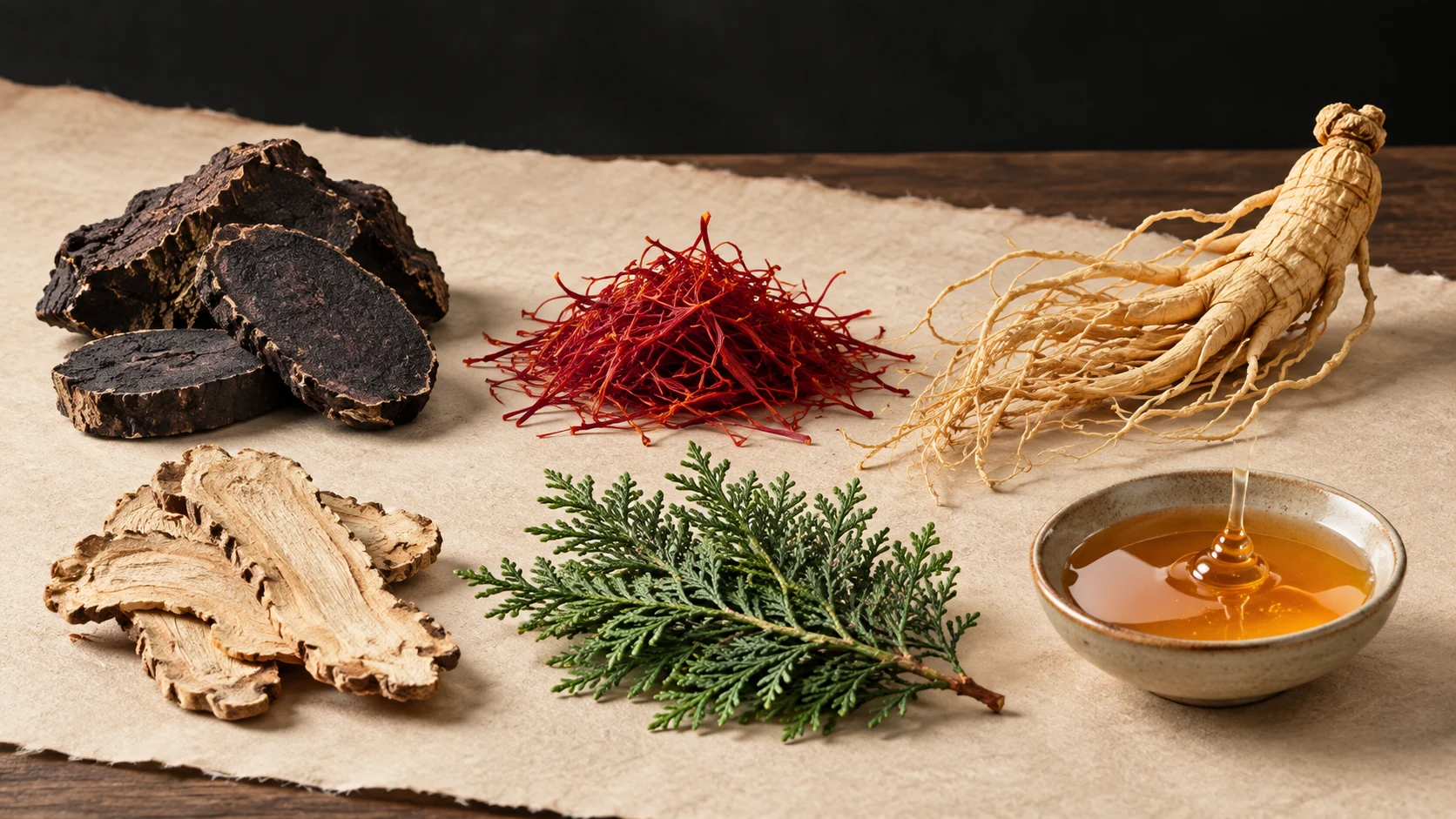
Fo-ti root
A botanical root named in the blend. The product notes do not specify its processing method.
Flower stigmas
The fine red threads of the saffron flower, listed among the botanical materials.
Botanical root
A root familiar in Chinese material traditions. Its variety is not specified in the supplied notes.
Chinese angelica root
Known in English as Chinese angelica; the root appears in the material description.
Ce Bai Ye · leaf
The green leaf material of Chinese arborvitae, a conifer also known as Platycladus orientalis.
A non-botanical material
Honey is also named in the product notes. This is not an all-plant material list.
This is a guide to the named materials, not a complete ingredient declaration. Please ask for the full current formula and care instructions, especially if you have fragrance or material sensitivities.
Ask a materials question03 / FROM MATERIAL TO OBJECT
The making sequence supplied with this comb describes selecting, preparing and shaping the blend, followed by shade drying. Each stage gives a little more context to the object in your hand.
Gather the materials for the blend.
Reduce the selected dry materials to powder.
Pass the powder through a sieve.
Bring the aromatic materials together.
Work the mixture into a moldable paste.
Tamp and work the paste before shaping.
Shape the comb and its decorative surface.
Let the shaped object dry in the shade.
Sequence adapted from the product’s Chinese craft notes. It is not an independently verified workshop record or a claim of certified intangible cultural heritage.
04 / A CLOSER LOOK
05 / CULTURE, WITHOUT THE MYSTERY
The Chinese notes describe three traditional meridian routes: the Du route along the center, the Bladder routes beside it, and the Gallbladder routes toward the sides. “Meridian” belongs to a traditional Chinese framework; these routes are not presented here as scientifically established anatomical structures.
You do not need to memorize those terms to understand the gesture. Start with the center of the scalp, notice the lines beside it, then look at the sides—as shown in Iris’s video. Keep movements gentle and comfortable.
This is a personal-care ritual, not a treatment for hair loss, gray hair or a scalp condition. Avoid irritated or broken skin and stop if use is uncomfortable.
Watch the full ritual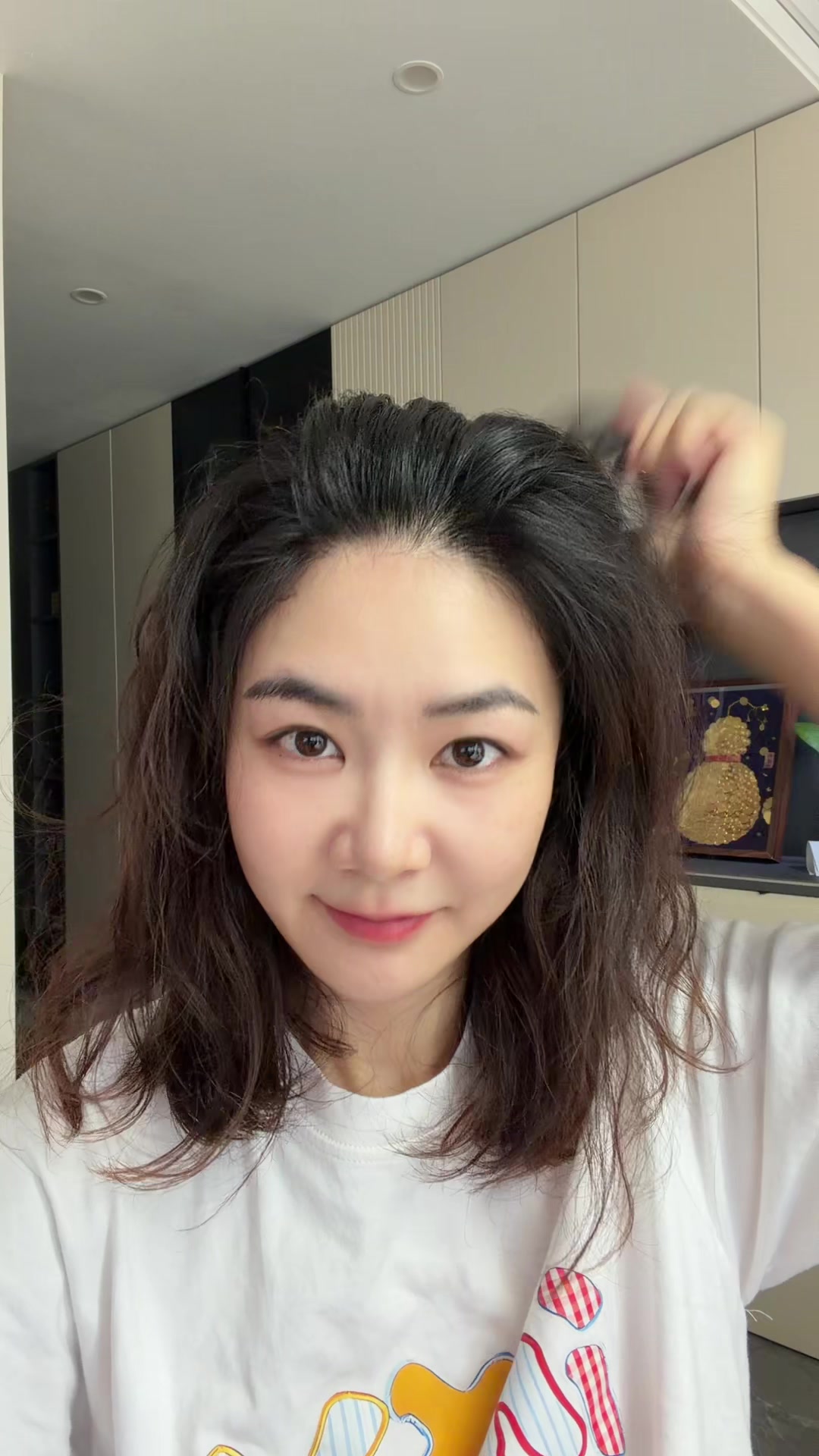 VIEW THE 99-SECOND GUIDE
A COMPANION TO HER EVERYDAY PRACTICE
For Iris, this is not an object saved for a special occasion. She begins her mornings with it and returns to gentle scalp combing during quiet moments in the day.
“In the simple act of combing, I find a moment to settle my heart and mind.”
Iris’s personal experience, not a promise of a particular result.
Meet the person behind the ritualBEFORE YOU CHOOSE
A CONVERSATION, NOT A CHECKOUT
Ask about materials, international pricing or delivery to your country.
Talk to us